Solar calendar expla
What Is a Solar Calendar, Exactly?
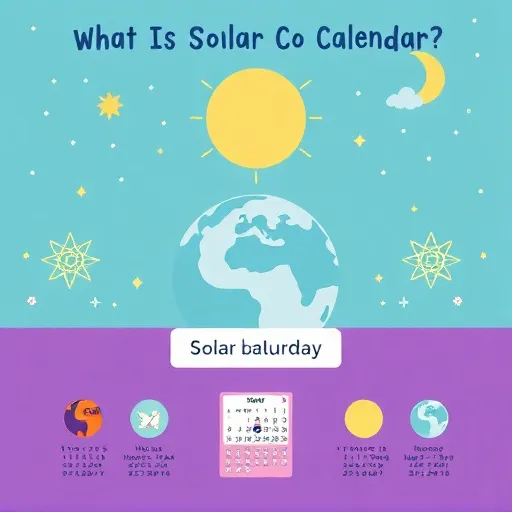
Okay, let's start with the basics — because understanding the lunar calendar vs solar calendar birthday difference really begins with knowing what a solar calendar actually is. A solar calendar is built entirely around the Earth's orbit around the Sun. One full trip takes roughly 365.24 days, which is exactly why most solar systems use 365 days and then sneak in a leap day every few years to stay in sync with the seasons. Without that little fix, your calendar would slowly drift out of alignment with spring, summer, and everything else.
The most widely used solar calendar today is the Gregorian calendar — the default system for business, government, and civil life across most of the world. When you glance at your phone's date display or check a standard appointment reminder, you're almost certainly staring at a solar date. That's the system most of us live inside every single day, often without thinking about it. And honestly, that's the whole point — a solar calendar is designed to be predictable and invisible.
The real beauty of a solar calendar is its consistency. Seasons land in the same months year after year. Your solar birthday falls on the same numerical date annually — say, always on a specific day in spring or autumn. That reliability is exactly why solar calendars dominate global scheduling. But here's where things get interesting: once you start comparing the lunar calendar vs solar calendar birthday difference, you realize not everyone experiences their birthday as a fixed point on the timeline.
The Solar Calendar's Role in the Lunar vs Solar Birthday Difference Explained
Think of the solar calendar as the anchor of the lunar calendar vs solar calendar birthday difference. It's the stable reference point — the fixed date that never moves. Your solar birthday is easy to track, easy to schedule, and easy for friends and coworkers to remember. That's precisely why the lunar calendar vs solar calendar birthday difference matters so much: one system stays put, and the other wanders. If you've ever wondered why your grandmother celebrates her birthday on a completely different date each year, the lunar calendar vs solar calendar birthday difference is the answer. It all comes down to which celestial body — the Sun or the Moon — is setting the rhythm.
Why the Lunar vs Solar Birthday Difference Confuses So Many People
Here's the thing — most people grow up inside one system and never question it. If you were raised on the Gregorian calendar, the lunar calendar vs solar calendar birthday difference can feel genuinely puzzling at first. Why would anyone's birthday move around? But once you understand that a lunar calendar follows the Moon's phases rather than the Earth's orbit, the lunar calendar vs solar calendar birthday difference suddenly makes perfect sense. A lunar month lasts about 29.5 days, and a typical lunar year runs roughly 354 days — about 11 days shorter than a solar year. That gap is the engine behind the entire lunar calendar vs solar calendar birthday difference. It's also why some lunisolar calendars add a leap month every two or three years, keeping festivals and seasonal celebrations roughly in place while still honoring the Moon's cycle.
Real-World Examples That Make the Lunar vs Solar Birthday Difference Click
Let's make the lunar calendar vs solar calendar birthday difference concrete. Imagine someone born on a specific solar date in mid-autumn. Their solar birthday will always be that same date — no surprises. But their lunar birthday might land in a completely different lunar month depending on how the leap months fall that year. In some years, their lunar birthday could show up nearly a month earlier or later on the solar calendar. That's the lunar calendar vs solar calendar birthday difference in action — one date holds still, the other drifts. And because the lunar calendar falls about 11 days behind the solar calendar each year, the lunar calendar vs solar calendar birthday difference can swing by several weeks once leap months get involved. For families with strong cultural traditions, tracking this is second nature. For everyone else, it's a fascinating reminder that time itself is a human invention layered on top of celestial mechanics. The lunar calendar vs solar calendar birthday difference isn't a flaw in either system — it's just two different ways of measuring the same journey around the Sun and the Moon.
Practical Takeaways About the Lunar vs Solar Birthday Difference for 2026
So what should you actually do with all this? First, know your solar birthday cold — that's your baseline. Then, if cultural heritage matters to you, look up your lunar birthday using a reputable lunar-solar date converter. Pay attention to whether your birth year included a leap month, since that can shift the result. And remember: the lunar calendar vs solar calendar birthday difference means your lunar birthday won't land on the same solar date every year — so set a yearly reminder to reconvert. Roughly a minute of effort saves you from the classic "wait, is my lunar birthday next week or next month?" panic. Whether you celebrate once or twice, the lunar calendar vs solar calendar birthday difference gives you options — and honestly, two birthdays means two cakes.