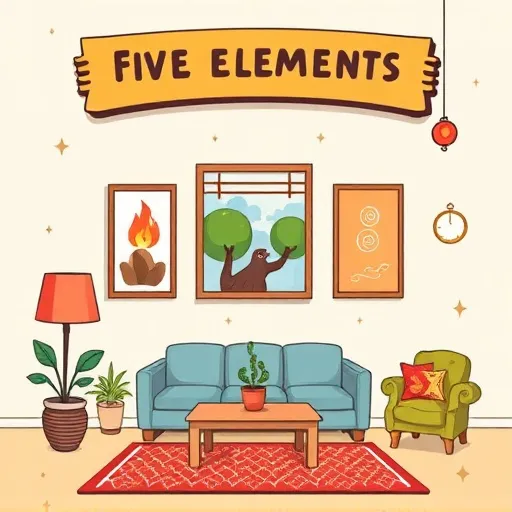
Five elements in roo
What Are the Five Elements, and Why Do They Matter in Interior Design?
The five elements — wood, fire, earth, metal, and water — sit at the heart of traditional Eastern philosophies about spatial harmony and energy flow. Each one has its own personality, color palette, texture, and emotional signature. When all five show up thoughtfully in a room, you get a space that feels complete, grounded, and alive. And honestly, that's the whole point of learning how to balance five elements in home decor.
By 2026, this concept has moved way beyond its traditional roots. Today's designers treat five element balancing as a practical framework for rooms that support different moods and functions — a home office that sharpens focus, a bedroom that deepens rest, a living area that encourages connection. Think of it as energy-aware interior design, and it's reshaping how people approach everything from paint choices to furniture materials. If you've ever wondered how to balance five elements in home decor without gutting your whole house, this is the framework you've been looking for.
Here's a quick rundown of what each element brings to a space:
- Wood — growth, vitality, flexibility. Think vertical lines, plants, natural fibers, and fresh greens.
- Fire — passion, warmth, visibility. Think statement lighting, rich reds and oranges, and candlelight.
- Earth — stability, nourishment, grounding. Think clay tones, ceramics, stone, and low, square shapes.
- Metal — clarity, precision, efficiency. Think metallic accents, white and gray tones, and circular forms.
- Water — flow, wisdom, calm. Think deep blues and blacks, glass, mirrors, and organic, wavy shapes.
Notice how each element maps onto both a visual quality and an emotional state. That dual role is exactly why five element decor works so well as a design tool — it gives you a language for describing not just how a room looks, but how it feels. Understanding how to balance five elements in home decor starts with this simple idea: every object in your space is saying something emotionally.
Why Five Element Theory Still Shapes Modern Interior Color Psychology and Mood
What makes this framework so sticky in 2026 is how neatly it overlaps with interior color psychology and modern wellness design. Both fields recognize that hue, texture, and form directly influence how you feel in a room. When you're figuring out how to balance five elements in home decor, you're really working with sensory-aware interiors — spaces designed around emotional resonance rather than pure aesthetics. That's why biophilic design and circadian lighting fit so naturally into this approach.
How to Tell If Your Home Is Out of Balance
Before you start rearranging furniture, it helps to diagnose what's actually off. Most imbalanced rooms lean heavily toward one or two elements while neglecting the rest. A few common patterns to watch for — and these are the exact signals that tell you it's time to learn how to balance five elements in home decor:
1. Too Much Wood: The Overgrown Space
Wood-heavy rooms feel lush but can become chaotic. Signs include an overwhelming number of plants, endless exposed shelving, and a sense that the space is "growing" out of control. If your living room feels more like a greenhouse than a gathering place, you likely need more metal (for structure) and earth (for grounding). This is a classic case study in how to balance five elements in home decor — sometimes you just need to subtract.
2. Too Much Fire: The Restless Room
Fire-dominant spaces are vibrant but exhausting. Bright reds, harsh overhead lighting, and lots of angular, pointed decor can create a subtle sense of agitation. This is common in home offices where people wonder why they can't concentrate. Introducing water and earth elements — softer blues, rounded ceramics, dimmable lighting — can cool things down fast. Knowing how to balance five elements in home decor means knowing when to dial the heat back.
3. Too Much Metal: The Clinical Feeling
Minimalist interiors sometimes overcorrect into sterility. All-white palettes, chrome finishes, and hard surfaces everywhere can make a room feel like a showroom rather than a home. Adding wood and earth — a woven rug, a wooden bowl, a terracotta planter — instantly restores warmth. This is one of the easiest fixes when you're learning how to balance five elements in home decor on a budget.
4. Too Much Water: The Drifting Space
Water-heavy rooms (dark tones, mirrors, glass, flowing fabrics) can feel moody and directionless if unbalanced. This shows up often in bedrooms that feel "floaty" or lacking structure. Fire and earth elements — a warm lamp, a solid wood nightstand — anchor the space. Nailing how to balance five elements in home decor in bedrooms is mostly about adding structure without killing the calm.
5. Too Much Earth: The Heavy Room
Earth-dominant spaces are cozy but can tip into sluggishness. Lots of brown tones, heavy furniture, and low ceilings (visually or literally) may make a room feel stuck. Wood and metal introduce movement and lift. Again, how to balance five elements in home decor comes down to spotting the missing pieces, not overhauling everything.
The good news? You don't need a full renovation to fix any of these. Small, targeted adjustments often do the trick — which brings us to the practical part.
Practical Strategies for Balancing the Five Elements in Home Decor
Start with a Room-by-Room Element Audit and Spatial Energy Check
Walk through each room and mentally tag every major item with an element. Your sofa? Likely earth or wood. Your floor lamp? Metal and fire. Your rug? Depends on color and material. Once you've tagged everything, you'll quickly see which elements dominate and which are missing. This simple spatial energy audit is one of the most effective habits you can build as a homeowner in 2026 — and it's step one for anyone serious about how to balance five elements in home decor.
Use Color as Your Fastest Lever for Interior Color Psychology
Color is the quickest way to shift elemental balance. If a room lacks water, add a deep blue throw pillow or a glass vase. Need more fire? A warm-toned accent wall or a cluster of amber candles does the job. Interior color psychology and five element theory overlap heavily here — both recognize that hue directly influences mood. Lean on this when you're on a budget and still want to master how to balance five elements in home decor. Paint choices alone can transform a room's entire energy signature.
Layer Textures and Materials for Five Element Harmony
Each element has a distinct material signature, and mixing them is where the magic happens. A metal-framed coffee table paired with a chunky wool rug and a ceramic bowl hits metal, earth, and a touch of wood all at once. Designers call this "material layering," but in five element terms, it's simply balance in action. Aim for at least three distinct materials in any given room. This is one of the most tangible ways to practice how to balance five elements in home decor without buying a single new piece of furniture.
Shape and Silhouette Matter More Than You Think
Beyond color and material, form carries elemental energy. Vertical, tall shapes read as wood. Pointed, triangular forms read as fire. Squares and low horizontals read as earth. Circles and arches read as metal. Wavy, asymmetrical lines read as water. When you're choosing furniture or decor, pay attention to silhouette — it's an underrated tool for five element harmony. Knowing how to balance five elements in home decor through shape alone is a skill most people never even consider.
Use Layered Lighting to Regulate Fire Energy in Any Room
Lighting is the literal embodiment of fire in a space. In 2026, layered lighting — combining ambient, task, and accent sources — has become standard practice, and it's also the easiest way to fine-tune fire energy. Harsh, single-source lighting creates fire overload; soft, multi-layered lighting creates a healthy, balanced glow. Dimmable fixtures are your best friend here. When people ask how to balance five elements in home decor, lighting is almost always the answer they didn't expect.
Bring in Living Elements Thoughtfully with Biophilic Design
Plants are the obvious wood element, but more isn't always better. Choose a few well-placed specimens rather than filling every corner. Consider the shape of the leaves, the height of the plant, and the pot material (ceramic for earth, metal for metal) — each choice shifts the elemental equation. A single sculptural plant in a stone pot can do more than ten small ones scattered around. This is biophilic design done right, and it's a core lesson in how to balance five elements in home decor.
Room-by-Room Element Recommendations for Five Element Harmony
Living Room: The Social Hub Where All Five Elements Shine
Living rooms benefit from a balanced but slightly fire-forward composition — warmth invites conversation. Aim for wood (shelving, plants), fire (warm lighting, accent colors), earth (sofa, rug), metal (frames, hardware), and a touch of water (mirror, glass table). This is the room where the full five-element palette shines most visibly, and it's the best place to practice how to balance five elements in home decor.
Bedroom: The Restoration Zone with Water and Earth Calm
Bedrooms should lean toward water and earth for calm and grounding. Soft blues and grays, natural linens, wooden furniture, and minimal metal. Keep fire energy low — think warm, dim lighting rather than bright statement pieces. A five element bedroom is one you actually want to sleep in. Figuring out how to balance five elements in home decor for rest is mostly about restraint.
Home Office: The Focus Space Built on Wood and Metal Clarity
For productivity, emphasize wood (growth, focus) and metal (clarity, structure), with a modest amount of fire for motivation. Avoid overwhelming water energy, which can make concentration drift. A wooden desk, a metal task lamp, and a small plant is a classic winning combination. This is how to balance five elements in home decor when the goal is deep work.
Kitchen and Dining: The Nourishment Zone of Earth and Fire
Earth and fire naturally dominate here — cooking is fire, and food is earth. Balance with metal (appliances, utensils), water (glassware, a reflective backsplash), and wood (cutting boards, open shelving). The goal is a kitchen that feels warm and functional rather than chaotic. When you're thinking about how to balance five elements in home decor in high-traffic spaces, this room proves the framework scales.
Common Mistakes to Avoid When Balancing the Five Elements
- Forcing all five elements into every corner. Balance is about the whole room, not each individual surface. Overloading a small vignette with all five elements creates visual noise — and it's the #1 mistake people make with how to balance five elements in home decor.
- Ignoring function. A meditation room and a home gym need different elemental profiles. Match the balance to the room's purpose, not a rigid template.
- Over-relying on decor objects. Elemental balance is structural as much as decorative. Furniture placement, architecture, and layered lighting matter as much as accessories.
- Chasing trends over intuition. If a room feels right, it probably is. Use five element theory as a guide, not a straitjacket.
- Skipping the audit. Guessing leads to overcorrection. Take the time to actually assess what's already there — this is non-negotiable if you want to know how to balance five elements in home decor properly.
How Five Element Balancing Fits Into 2026 Design Trends and Smart Home Tech
This year's interiors are all about intentional living — spaces that support wellbeing, not just aesthetics. Biophilic design, circadian lighting, and sensory-aware interiors have all gone mainstream, and five element balancing sits comfortably at the intersection of all three. It's a framework that speaks the same language as modern wellness design: harmony, flow, and emotional resonance. That's why how to balance five elements in home decor keeps showing up in design conversations alongside spatial harmony and energy flow.
What's especially compelling is how accessible it's become. You don't need a designer or a big budget. A few strategic swaps — a new lamp here, a different rug there, a plant relocated to the right corner — can shift a room's entire energy signature. That accessibility is a big part of why this approach keeps gaining traction among everyday homeowners who want to learn how to balance five elements in home decor without the overwhelm.
The Role of Digital Tools and Smart Home Tech in Elemental Balance
Interestingly, 2026 has also brought a wave of smart home platforms that let you adjust lighting color temperature, ambiance, and even scent to match different elemental moods. While no app can replace thoughtful design, these tools make it easier than ever to experiment with fire and water energy in real time. A warm amber glow in the evening versus a cool, clear light in the morning is essentially how to balance five elements in home decor in action — just through tech.
Final Thoughts: Balance Is a Practice, Not a Project
Balancing the five elements in home decor isn't a one-and-done task — it's an ongoing conversation with your space. Seasons change, needs shift, and the rooms that feel best are usually the ones that get adjusted regularly. Start with an audit, make a few targeted shifts, and pay attention to how each room makes you feel. The five elements aren't a rigid rulebook; they're a language for understanding the spaces you live in — and mastering how to balance five elements in home decor is really just learning that language.
And honestly, that's the most freeing part. You don't need to get it "perfect." You just need to get it feeling right — and in 2026, that's exactly what wellness design, spatial harmony, and energy flow are all about. Keep practicing how to balance five elements in home decor, and your space will keep rewarding you for it.